Publications
Women's health
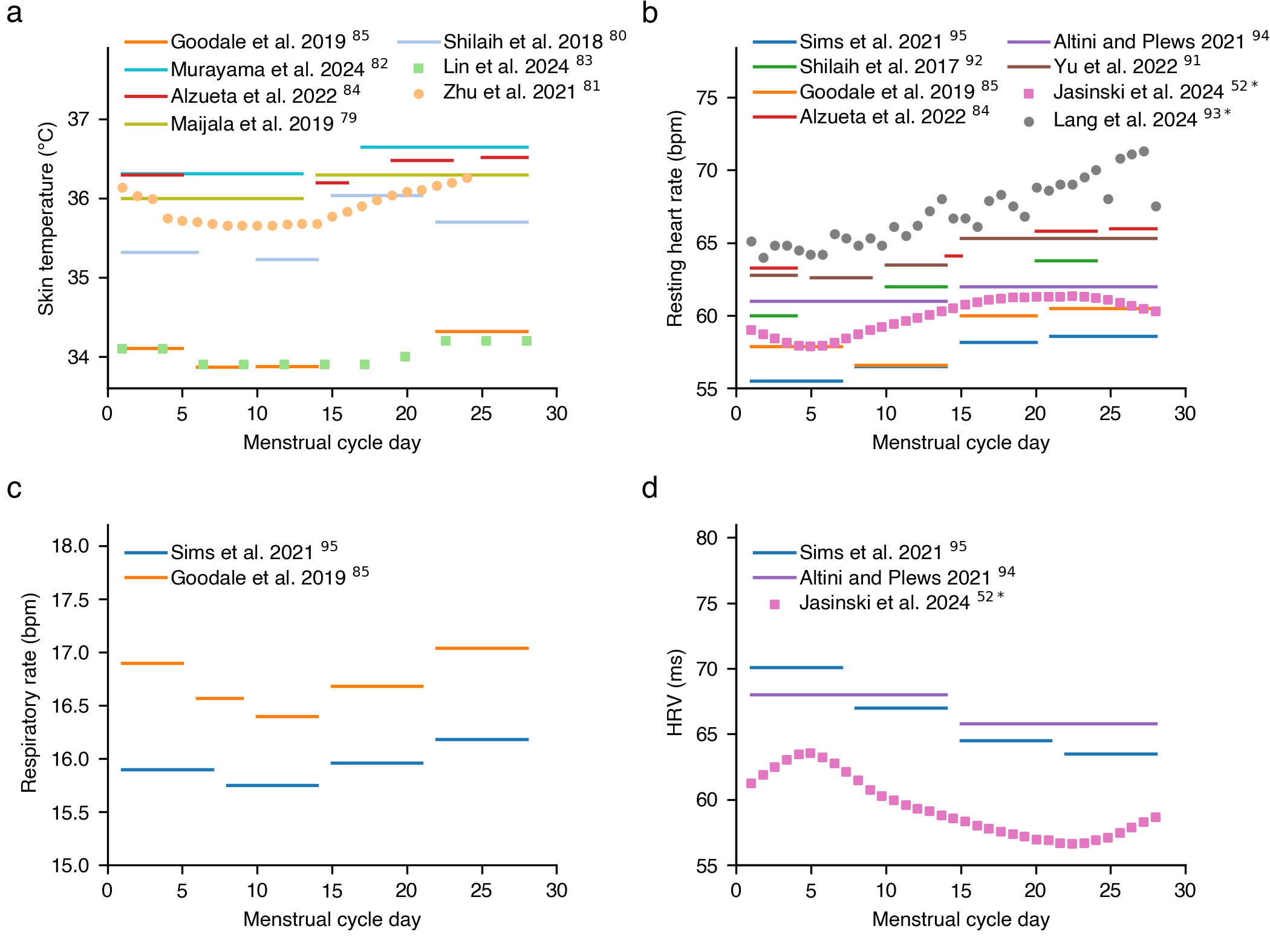
Decoding menstrual health across the lifespan: a scoping review on the use of digital health tools to improve women's health and performance
Sarah C Johnson *, Johanna O’Day *, Emily Kraus, Scott Delp, Jennifer Hicks. npj Women's Health 2026 doi.org/10.1038/s44294-026-00146-7
*joint first author
Review paper. Our overall goal was to aid researchers in filling in gaps in women’s health research using digital health tools by first compiling the quantatative insights gained using digital tools,offering researchers a guide as to the current capabilities of those existing digital health tools then discussing the remaining gaps in knowledge that use of these tools could fill.
The menstrual cycle through the lens of a wearable device: insights into physiology, sleep, and cycle variability.
Alexander Gonzalez, Johanna J. O’Day, Sarah C. Johnson, Jeongeun Kim, Summer Jasinski, Kristen Holmes, Scott L. Delp, Jennifer L. Hicks. Accepted npg Digital Health.doi.org/10.1101/2025.09.11.675620
The goal of this paper was to find insights into how behaviour can influence menstrual cycle characteristics and the known relationshops between biometrics and the menstrual cycle phase. This study involved analysis of 1.2 million days of data collected with a WHOOP device, including heart rate, heart rate variability, respiration rate and sleep behaviour. The final cohort consisted of 2,596 women who logged 42,759 cycles.We found that menstrual cycle length is strongly associated with how much heart rate, hrv and respiration rate vary over the menstrual cycle and that reduced sleep impacted physiological metrics across all stages of the menstrual cycle. My role focused on conception and writing.
Sports and Performance
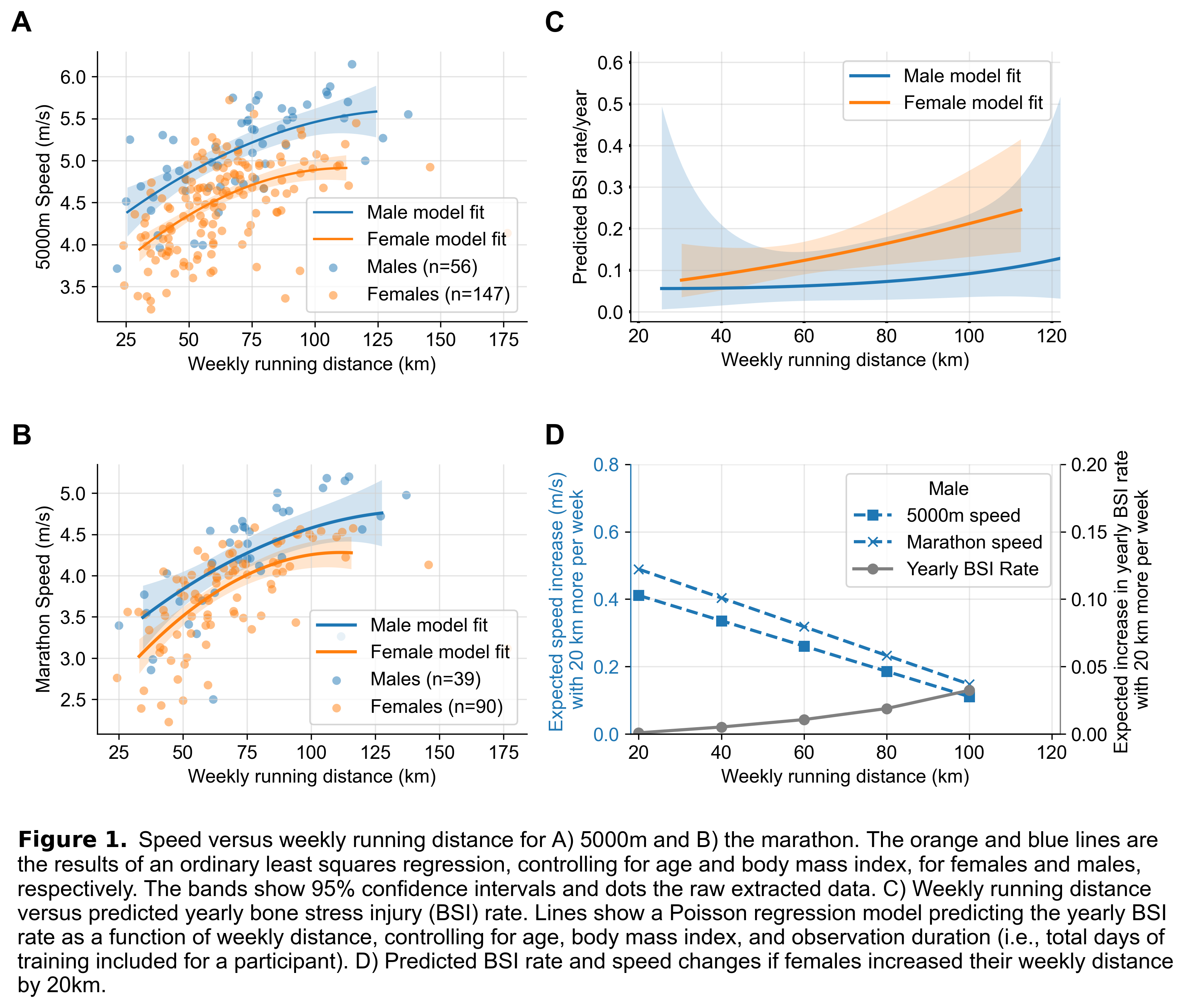
Using wearable data to predict speed and injury risk in runners
Sarah C. Johnson, Alexander Gonzalez, Johanna J. O’Day, Scott L. Delp, Ellen Kuhl, Jennifer L. Hicks.
This abstract is the first analysis that we have submitted to World Congress of Biomechanics 2026 and is part of our current work using data collected with the SmartwatchStudy : check back for updates!
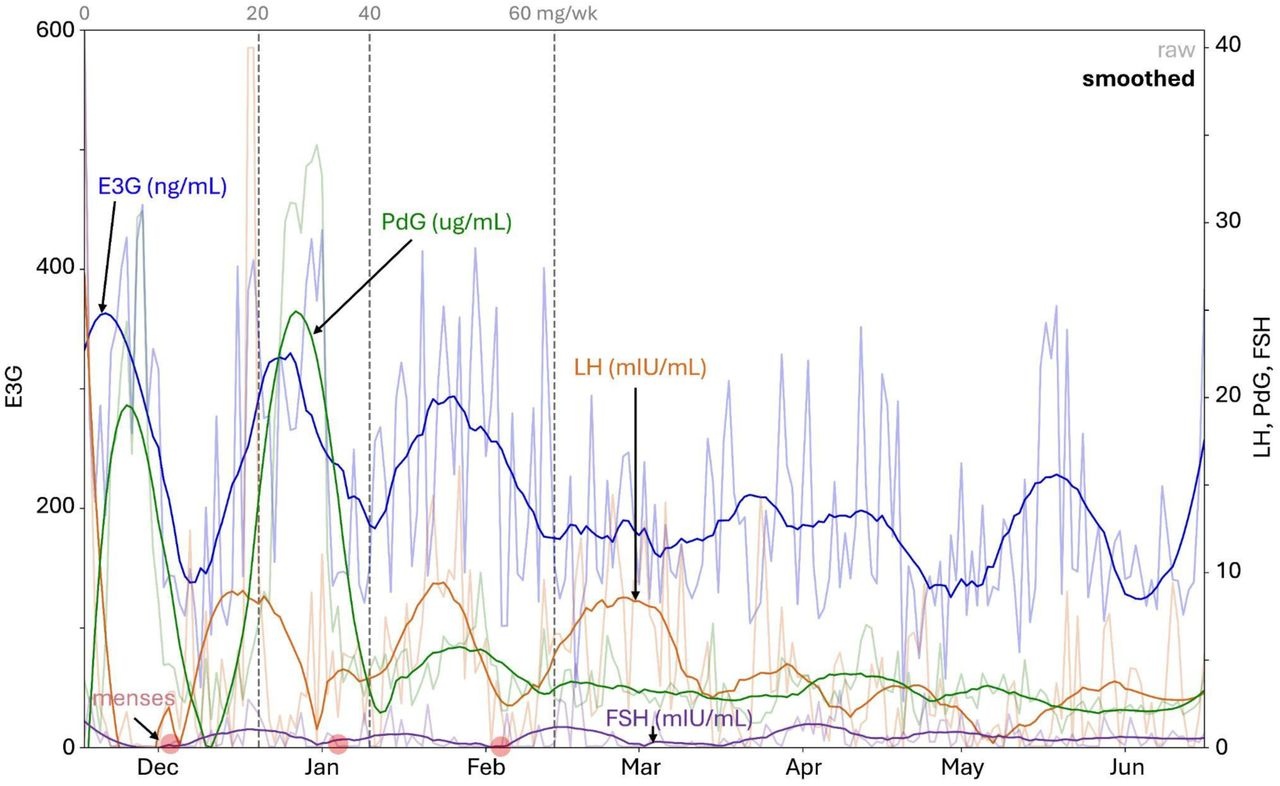
One year of testosterone therapy in a transmasculine amateur triathlete affects hormone cycles, exercise capacity, and muscular physiology.
Skyler R. St. Pierre, Sarah C. Johnson, Julie Muccini, Brianna Bourne, Benjamin H. Laniakea, Scott Delp, Jennifer Hicks. Preprint: doi.org/10.1101/2025.09.11.25335594
While exercise performance changes are expected during testosterone therapy, the underlying hormonal and dose-related changes haven't been characterized. In this novel case study, we tracked a transmasculine amateur triathlete for 2 months pre-treatment and 12 months during testosterone therapy using daily urine hormone testing, bi-monthly serum testing, and monthly assessments of physiology, body composition, metabolic rate, and VO2 max. We found indication of loss of ovulation prior to loss of menses and recurrent changes in female hormones that were only consistently supressed when testosterone dose was increased. Although absolute V02 increased, due to the increase in mass observed, overall VO2 max was not significantly altered, instead peaking and decreasing with training increases and decreases.The study highlighted increased muscle mass and caloric needs when combining testosterone therapy with regular training, addressing concerns about fat gain during treatment.
The lymphatic system
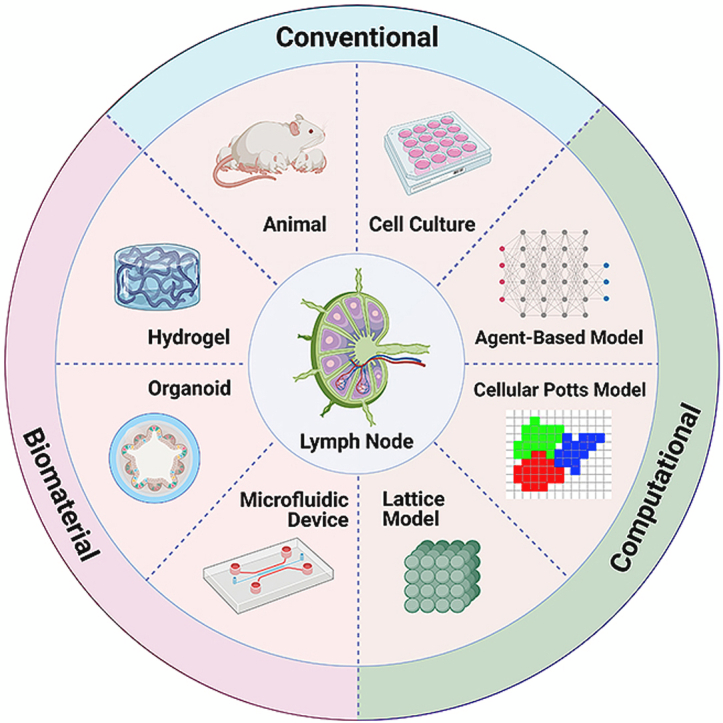
Integrative lymph node-mimicking models created with biomaterials and computational tools to study the immune system
Yufeng Shou *, Sarah C. Johnson*, Ying Jie Quek, Xianlei Li, Andy Tay. Materials Today Bio,Volume 14,2022,100269. doi: 10.1016/j.mtbio.2022.100269
*joint first author
Review paper: The goal was to describe the known structures and functions of the lymph node, followed by an up-to-date description of the biomaterial approaches, how insights from mathematical and computational models can be used to inform design, and an update on the current lymph node mimicking models. My contribution particularly focuse on summarising use of mathematical and computational lymph node models.
Lymph node swelling combined with temporary effector T cell retention aids T cell response in a model of adaptive immunity
Sarah C. Johnson, Jennifer Frattolin, Lowell T. Edgar, Mohammad Jafarnejad, James E. Moore Jr. J R Soc Interface 1 December 2021; 18 (185): 20210464. doi.org/10.1098/rsif.2021.0464
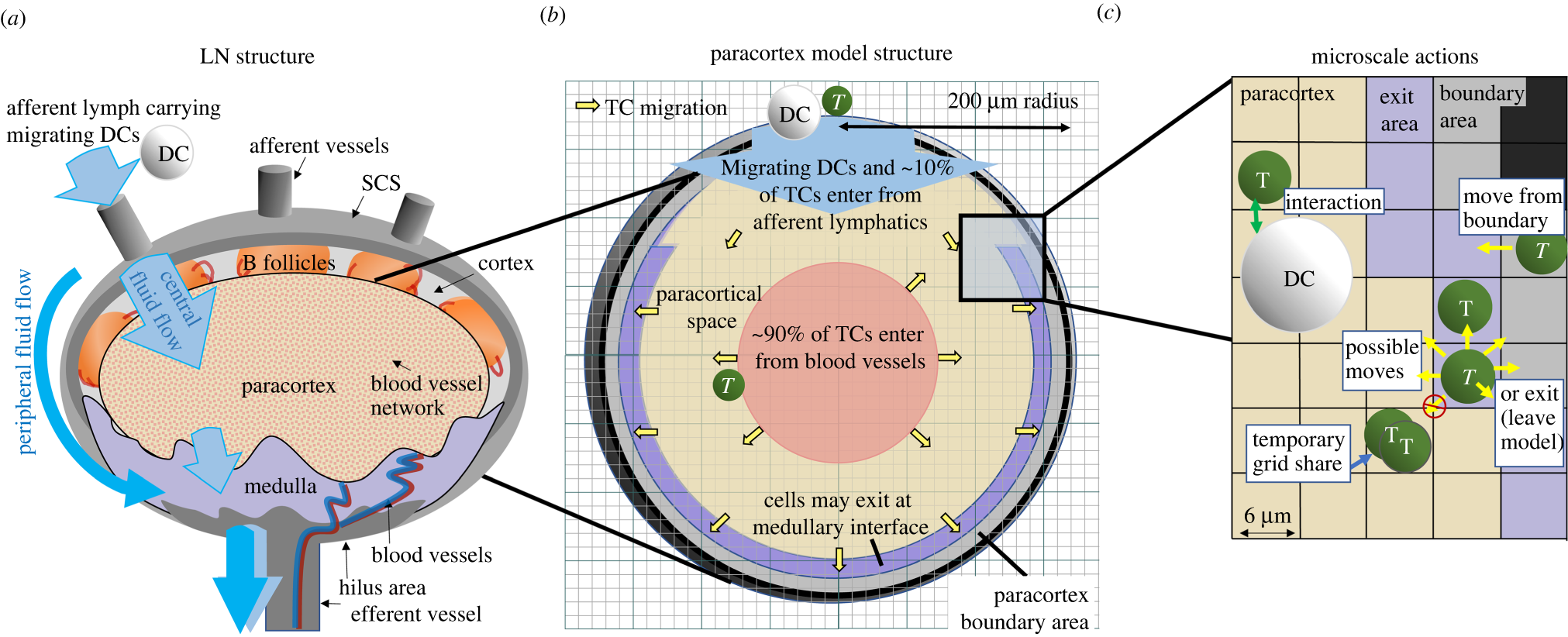
For this project I built an Agent Based Model representing the central compartment of a lymph node (the paracortex) and modelled T cells and Dendritic Cells and specifically the response to antigen presenting dendritic cells combined with different swelling responses and chemokines (signaling molecules that form gradients to direct immune cell movement). The purpose was to investigate how swelling can impact the production of effector cells.
We found that initial swelling consistently aided the activation of T cells but too much swelling during the T cell proliferative phase led to a blunted effector T cell production. This effect could be mitigated by up-regulating the expression of Sphingosine-1-Phosphate receptor on T cell surfaces, an action that results in reduced probability of T cells to exit the lymph node. This project enabled development of java-coding skills (the model was written in java) and how to use high performance computing.
Inflammatory state of lymphatic vessels and miRNA profiles associated with relapse in ovarian cancer patients
Sarah C. Johnson, Sanjukta Chakraborty, Anastasios Drosou, Paula Cunnea, Dimitrios Tzovaras, Katherine Nixon, David C. Zawieja, Mariappan Muthuchamy, Christina Fotopoulou , James E. Moore Jr. 2020. PLOS One. doi.org/10.1371/journal.pone.0230092
For patients with epithelial ovarian cancer, lymph nodes metastases are common and associated with a more dismal prognosis. The removal of bulky LNs is important for post-surgery survival but it has been shown that there is no benefit to removing clinically normal-appearing LNs. However, assessment of the involvent and changes in the lymphatic vessels that connect the lymph nodes, outside of the tumour, have not been investigated.
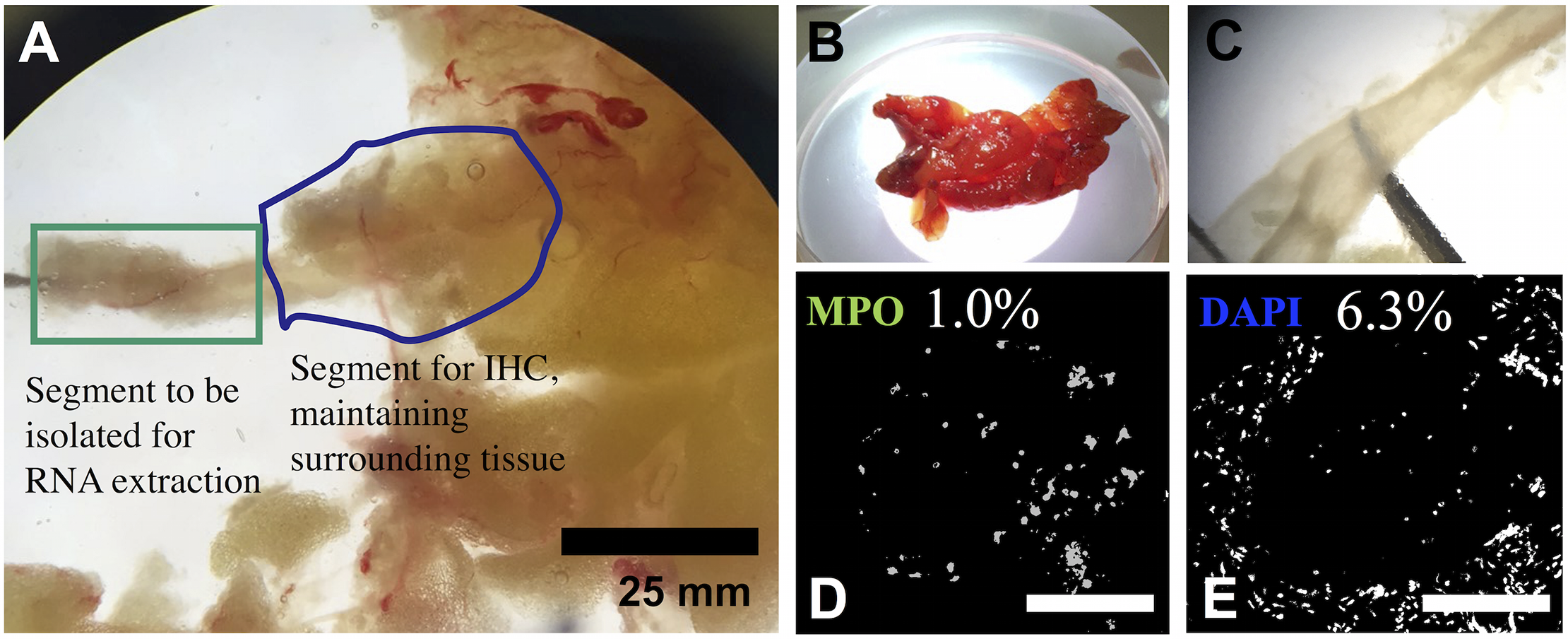
In this study we aimed to assess prognosis was associated with a) how inflamed the lymphatic vessels were and b) how miRNA (regulators of gene expression) was expressed in the lymphatic vessels. To do this macroscopically normal appearing LVs along the external iliac vessels were removed with the nearby LN as part of the debulking procedure. I then isolated the lymphatic vessels and divided vessels into two, carrying out imaging on one half and miRNA analysis on the other.
We found that the inflammation state of the lymph node was associated with prognosis - very inflammation was correlated with worse prognosis and that several micro-RNA were significantly down-regulated in patients with worse prognosis (particularly the let-7 family).